2026 Update: Almond Oil Manufacturing Plant Setup Cost & Machinery Details
The article highlights the growing market demand for almond oil across health, cosmetic, and pharmaceutical sectors. It connects this demand with the importance of choosing the right manufacturing setup, machinery quality, and extraction method. The blog positions almond oil manufacturing as a stable, long-term business opportunity backed by rising consumer preference for natural products.
The demand for almond oil in India is growing steadily across health, cosmetic, pharmaceutical, and personal care industries. With rising awareness about natural oils and chemical-free products, almond oil has become a high-value product with strong market potential. As a result, many entrepreneurs and manufacturers are now exploring opportunities in this sector.
If you’re planning to start a plant, understanding the almond oil manufacturing plant cost and machinery requirements is the first and most important step. This 2026 update gives you a clear, practical overview, without complications or unrealistic promises.
Why Almond Oil Manufacturing Is a Growing Business
Almond oil is widely used in:
- Hair care products
- Skincare and cosmetics
- Baby care products
- Ayurvedic and herbal medicine
- Cooking and health supplements
With consumers shifting towards natural and plant-based products, the demand for high-quality almond oil is expected to grow consistently. This makes almond oil manufacturing a long-term business opportunity rather than a short-term trend.
Almond Oil Manufacturing Plant Cost – What to Expect
The almond oil manufacturing plant cost depends on several factors, including plant capacity, automation level, quality of machinery, and production scale. There is no single fixed cost, but it generally falls into three main categories:
Small-scale setup
Ideal for startups and small businesses.
Includes basic crushing, filtering, and packaging units.
Lower investment, suitable for local markets.
Medium-scale setup
Designed for growing brands and regional distribution.
Includes semi-automatic machinery, better filtration systems, and higher output.
Balanced cost with better production efficiency.
Large-scale setup
For industrial-level production and bulk supply.
Includes fully automated machines, high-capacity extraction units, and advanced refining systems.
Higher investment but suitable for national and export markets.
Your total cost will depend on:
- Production capacity per day
- Type of extraction method (cold press or refined)
- Automation level
- Quality standards
- Infrastructure and space
- Power and utility requirements
Instead of focusing only on low cost, it’s more important to focus on long-term efficiency, quality output, and durability of machinery.
Machinery Required for Almond Oil Manufacturing
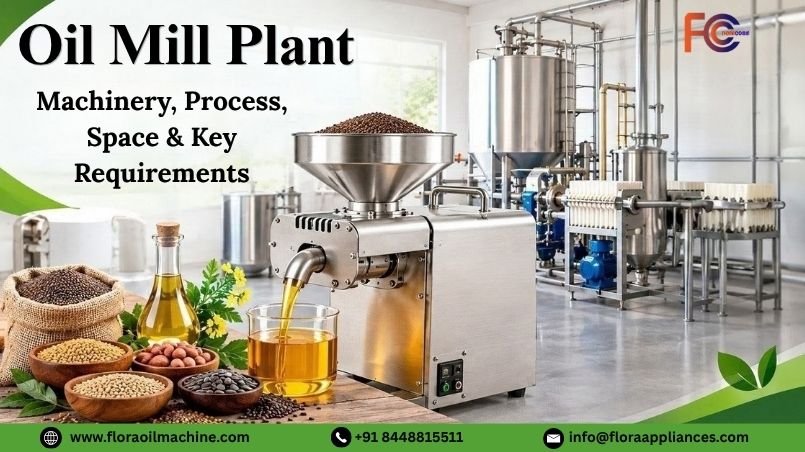
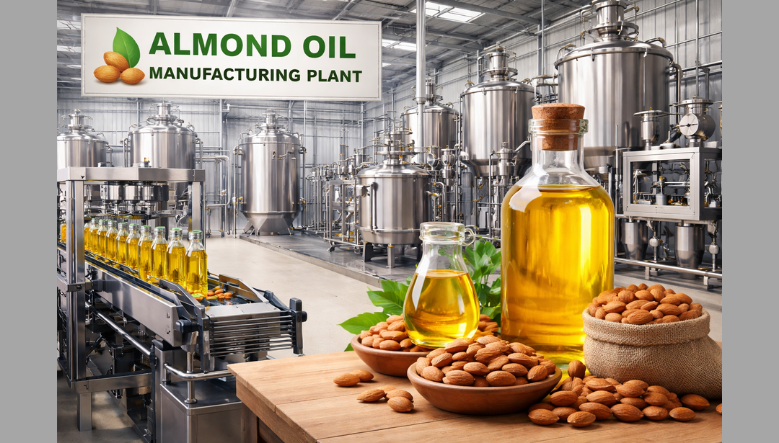
A standard almond oil manufacturing plant includes the following machines:
1. Cleaning Machine
Removes dust, stones, and impurities from almonds before processing.
2. Almond Crushing/Grinding Machine
Prepares almonds for oil extraction by breaking them into smaller particles.
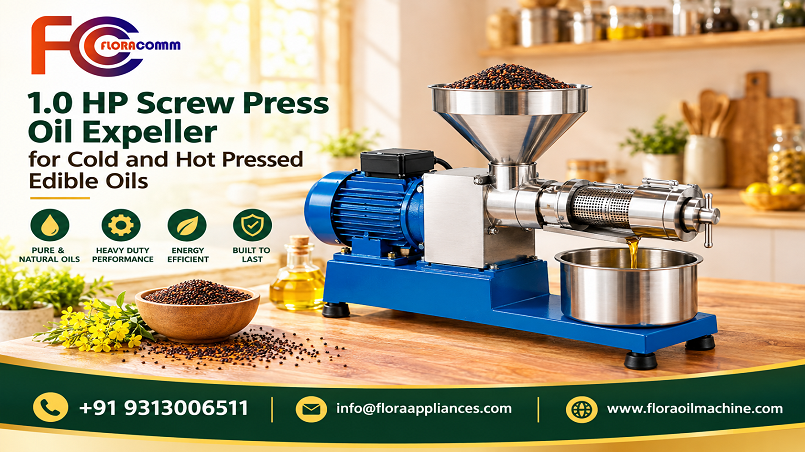
3. Oil Extraction Machine (Cold Press / Expeller)
This is the core machine that extracts oil from almonds. Cold press machines are preferred for premium-quality oil.
4. Oil Filter Press Machine
Removes impurities and improves oil clarity and quality.
5. Storage Tanks
Used for storing raw oil and filtered oil safely.
6. Filling and Packaging Machine
Used for bottling and packaging almond oil for sale.
Depending on the scale, automation and integration of these machines can vary.
Cold Press vs Refined Almond Oil Setup
Most modern manufacturers prefer cold press extraction because:
- It retains natural nutrients
- Preserves aroma and quality
- Has higher market value
- Supports premium branding
Cold press setups may cost slightly more initially but deliver better long-term profitability through product quality and market demand.
Space and Infrastructure Requirements
A basic almond oil manufacturing unit requires:
- Raw material storage area
- Processing area
- Machinery installation space
- Oil storage area
- Packaging area
- Power and water supply
Plant layout planning plays a major role in operational efficiency and safety.
Why Machinery Quality Matters More Than Cost
Many businesses fail not because of market demand, but because of poor-quality machinery. Low-grade machines increase:
- Maintenance costs
- Downtime
- Oil loss
- Energy consumption
- Production inconsistency
Investing in reliable machinery ensures stable production, better oil yield, and long-term profitability.
Flora Oil Machine’s Approach
At Flora Oil Machine, we focus on providing practical, durable, and efficient oil manufacturing solutions. Our systems are designed to support long-term production needs, not just short-term setup.
We help clients with:
- Plant capacity planning
- Machinery selection
- Cost optimization
- Setup guidance
- Long-term production efficiency
Our goal is not just to sell machines, but to support sustainable business growth.
Final Thoughts
Setting up an almond oil manufacturing plant in 2026 is a smart business move when planned properly. Understanding the almond oil manufacturing plant cost, choosing the right machinery, and focusing on quality production are the keys to success.
With rising demand for natural oils, almond oil manufacturing offers strong growth potential. With the right planning and reliable machinery support, it can become a stable and profitable long-term business.
Flora Oil Machine continues to support entrepreneurs and manufacturers in building efficient, scalable, and future-ready oil production plants, helping turn business ideas into successful operations.