Oil Mill Plant Setup: Machinery, Process, Space & Key Requirements
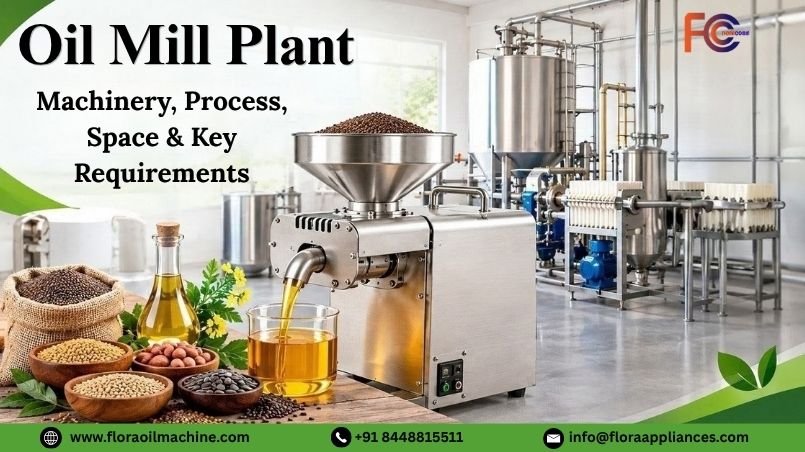
Setting up an oil mill plant requires more than an oil extraction machine. It involves oil mill machinery, seed preparation, extraction, filtration, storage, utilities, adequate space, and proper workflow planning to create an efficient production setup.
Setting up an oil mill plant involves much more than installing an oil extraction machine. A complete setup needs the right combination of oil mill machinery, raw material preparation, extraction, filtration, storage, utilities, space, and workflow planning.
The type of oilseed being processed, required production capacity, level of automation, available space, and desired output can all influence the plant design.
Whether the goal is to process mustard, groundnut, sesame, sunflower, soybean, or other oilseeds, understanding the complete process before setting up an oil mill can help create a more efficient production system.
What Is an Oil Mill Plant?
An oil mill plant is a production setup where oilseeds are processed to extract edible or industrial oil. The process generally involves preparing the seeds, extracting the oil, filtering it, and storing the finished product.
Depending on the type of oilseed and production requirement, an oil mill may include different combinations of:
● Seed cleaning equipment
● Seed preparation machinery
● Oil expeller machines
● Oil filtration systems
● Oil pumps
● Storage tanks
● Conveying equipment
● Material-handling systems
● Supporting utilities
The machinery configuration can vary according to the type of oilseed, production capacity, extraction method, and level of automation.
How Does an Oil Mill Plant Work?
Although the exact process differs between oilseeds, a typical oil mill follows a series of basic stages.
1. Seed Cleaning
The first step is removing unwanted materials such as dust, stones, husks, and other impurities from the incoming oilseeds.
Proper cleaning helps protect machinery and improves the quality of the material entering the extraction process.
2. Seed Preparation
Depending on the oilseed, preparation may include processes such as grading, dehulling, cracking, conditioning, or cooking.
The objective is to prepare the seed properly for efficient oil extraction.
3. Oil Extraction
The prepared oilseeds are fed into an oil expeller or suitable extraction machine.
Mechanical pressing applies pressure to the oil-bearing material, separating oil from the solid portion. The exact extraction conditions depend on the type of seed and machinery being used.
4. Oil Filtration
Freshly extracted oil can contain fine solid particles. Filtration helps separate these unwanted particles and produces cleaner oil.
An appropriate filtration system can be selected according to the required oil quality and production capacity.
5. Oil Storage
After filtration, the oil can be transferred to suitable storage tanks or containers before further processing, packaging, or dispatch.
6. Oilcake Handling
The solid material remaining after mechanical extraction is commonly known as oilcake or oilseed cake. Depending on the type of seed and applicable requirements, it may have further uses such as animal feed or other applications.
Machinery Required for an Oil Mill Plant
The machinery required depends on the type of oilseed and plant capacity. A typical oil mill may include several stages of equipment.
Seed Cleaning Machine
Cleaning equipment removes impurities from raw oilseeds before they enter the main processing line.
Seed Preparation Equipment
Different oilseeds may require different preparation methods. Equipment can be selected according to whether the seeds require dehulling, cracking, conditioning, cooking, or other preparation.
Oil Expeller Machine
The oil expeller is one of the key machines in a mechanical oil extraction setup. It presses prepared oilseeds to separate oil from the solid material.
Oil Filter Press
A filter press helps remove suspended solid particles from extracted oil. It can improve the clarity and cleanliness of the oil before storage.
Oil Pumps
Pumps are used to transfer oil between different stages of the process and into storage tanks.
Storage Tanks
Storage tanks provide a controlled location for holding filtered oil before packaging or further processing.
Conveying & Material Handling Equipment
Conveyors and other material-handling systems can help move seeds, oilcake, and other materials between different sections of the plant.
Oil Mill Plant Process: Step-by-Step
A simplified oil mill workflow can be understood as:
Raw Oilseeds → Cleaning → Preparation → Extraction → Filtration → Storage → Packaging/Dispatch
The exact sequence may change depending on the oilseed and the processing technology used.
For example, some seeds may require additional preparation or conditioning before they are fed into the expeller, while other seeds may follow a comparatively simple mechanical extraction process.
Space Requirements for an Oil Mill Plant
There is no single space requirement that applies to every oil mill plant. The required area depends on factors such as:
● Production capacity
● Number and size of machines
● Type of oilseed
● Raw material storage requirements
● Finished oil storage
● Oilcake storage
● Material-handling arrangement
● Loading and unloading requirements
● Worker movement
● Maintenance access
● Future expansion plans
A practical plant layout should provide sufficient space around machinery for operation, inspection, cleaning, and maintenance.
It is also useful to separate raw-material handling, processing, filtration, finished-product storage, and dispatch areas where the plant design permits.
Raw Materials Used in an Oil Mill
Different oil mills process different types of oilseeds. Common examples include:
● Mustard seeds
● Groundnuts
● Sesame seeds
● Sunflower seeds
● Soybeans
● Cottonseed
● Copra and other oil-bearing materials
The choice of machinery and processing conditions should be matched to the characteristics of the particular oilseed.
Production Capacity and Machinery Selection
Oil mill machinery is available for different production requirements. Capacity is commonly discussed in terms such as kilograms per hour or tonnes per day, depending on the machine and plant configuration.
When selecting capacity, it is important to consider:
● Expected raw-material availability
● Required daily production
● Operating hours
● Oilseed type
● Extraction method
● Available storage capacity
● Future production plans
Selecting machinery simply on the basis of the highest stated capacity may not always be appropriate. The complete processing line should be considered so that different stages can work efficiently together.
Utilities and Infrastructure
Apart from the main machinery, an oil mill plant requires supporting infrastructure.
Depending on the plant configuration, this may include:
● Electrical power supply
● Water supply where required
● Ventilation
● Adequate lighting
● Storage areas
● Drainage
● Material-handling arrangements
● Loading and unloading space
● Maintenance area
● Safety provisions
The actual requirements depend on the machinery, process, plant size, local conditions, and applicable regulations.
Oil Filtration and Storage
Oil filtration is an important stage after mechanical extraction. The extracted oil can contain small particles of seed material that need to be separated.
A suitable filtration system can help produce cleaner oil before storage.
Storage conditions also matter. Tanks and containers should be suitable for the type of oil being stored and the intended storage period. Proper handling can help maintain product quality and reduce contamination risks.
Factors Affecting Oil Mill Plant Setup Cost
The cost of setting up an oil mill plant can vary significantly because there is no single configuration suitable for every project.
Major cost factors can include:
Machinery
The number, size, capacity, and automation level of machines can significantly influence the overall investment.
Production Capacity
A higher-capacity plant generally requires larger or additional equipment and supporting infrastructure.
Type of Oilseed
Different oilseeds may require different preparation and extraction arrangements.
Automation
Manual, semi-automatic, and automated systems can have different investment and operational requirements.
Building and Infrastructure
Land, building construction, electrical installation, storage, ventilation, and other infrastructure contribute to the overall setup.
Filtration and Storage
The required filtration capacity and storage arrangement can also influence the project cost.
Material Handling
Conveyors, elevators, pumps, and other handling equipment may be required depending on the plant design.
For this reason, an oil mill plant budget should be developed according to the specific production capacity, oilseed, machinery configuration, and infrastructure requirements rather than using a single generic figure.
Small vs. Commercial Oil Mill Plant
Oil mill plants can be designed for different scales of operation.
Small Oil Mill Plant
A smaller setup may be suitable for relatively limited production requirements. It generally requires less space and a simpler machinery arrangement.
Commercial Oil Mill Plant
A commercial plant is designed for larger production volumes and may include higher-capacity machinery, greater storage, more extensive material handling, and increased automation.
The right scale depends on raw-material availability, market demand, investment capacity, available infrastructure, and expected production.
How to Choose the Right Oil Mill Machinery
Choosing machinery should begin with the oilseed and production requirement, rather than simply selecting equipment based on price or advertised capacity.
Consider:
1. What type of oilseed will be processed?
2. What production capacity is required?
3. What extraction method is appropriate?
4. What level of automation is required?
5. How much space is available?
6. What filtration capacity will be needed?
7. How will raw materials and oilcake be handled?
8. What storage capacity is required?
9. What utilities are available?
10. Is future production expansion expected?
Looking at the complete production flow helps create a more practical and balanced machinery configuration.
Flora Oil Machine for Oil Mill Machinery
Flora Oil Machine provides oil mill machinery solutions for businesses and processing requirements involving oilseed extraction.
When planning an oil mill plant, the machinery requirement can vary according to the oilseed, desired capacity, processing method, and overall plant configuration. Therefore, understanding the production requirement first is an important step before finalizing the machinery setup.
A properly planned oil mill can bring together seed preparation, oil extraction, filtration, storage, and material handling into a coordinated production process.
Conclusion
Setting up an oil mill plant requires careful planning of machinery, production flow, space, raw materials, utilities, filtration, storage, and material handling.
The process generally moves from seed cleaning and preparation to oil extraction, filtration, storage, and handling of the remaining oilcake. However, the exact machinery and layout depend on the type of oilseed and required production capacity.
Understanding these requirements before setting up a plant can help create a more practical production system and ensure that the different stages of the process work together efficiently.
For businesses exploring oil extraction and processing equipment, Flora Oil Machine can be considered as a machinery solution provider for oil mill requirements.
Frequently Asked Questions
1. What machinery is required for an oil mill plant?
A typical oil mill may require seed cleaning and preparation equipment, an oil expeller, filtration equipment, pumps, storage tanks, and material-handling systems. The exact machinery depends on the oilseed and production capacity.
2. How much space is required for an oil mill plant?
There is no fixed space requirement. It depends on plant capacity, machinery size, raw-material storage, finished-product storage, oilcake handling, loading areas, and the overall layout.
3. Which oilseeds can be processed in an oil mill?
Depending on the machinery and process, oil mills can process oilseeds such as mustard, groundnut, sesame, sunflower, soybean, cottonseed, and other oil-bearing materials.
4. What is the role of an oil expeller?
An oil expeller mechanically presses prepared oilseeds to separate oil from the solid material. It is a key machine in many mechanical oil extraction setups.
5. Why is oil filtration required?
Filtration helps remove fine solid particles from freshly extracted oil, improving its clarity and cleanliness before storage or further processing.
6. What factors affect the cost of an oil mill plant?
Machinery capacity, oilseed type, automation level, building and infrastructure, filtration, storage, material handling, and production requirements can all affect the overall setup cost.
7. How do I choose oil mill machinery?
Start by identifying the oilseed, required production capacity, extraction method, available space, automation requirements, storage needs, and future expansion plans. These factors can then be used to determine a suitable machinery configuration.
8. Can an oil mill plant be customized?
Yes. Oil mill configurations can be designed according to factors such as oilseed type, production capacity, processing stages, available space, automation requirements, and storage arrangements.